Pickling Line Acid Fume Suppression FRP Piping Installation
Overview
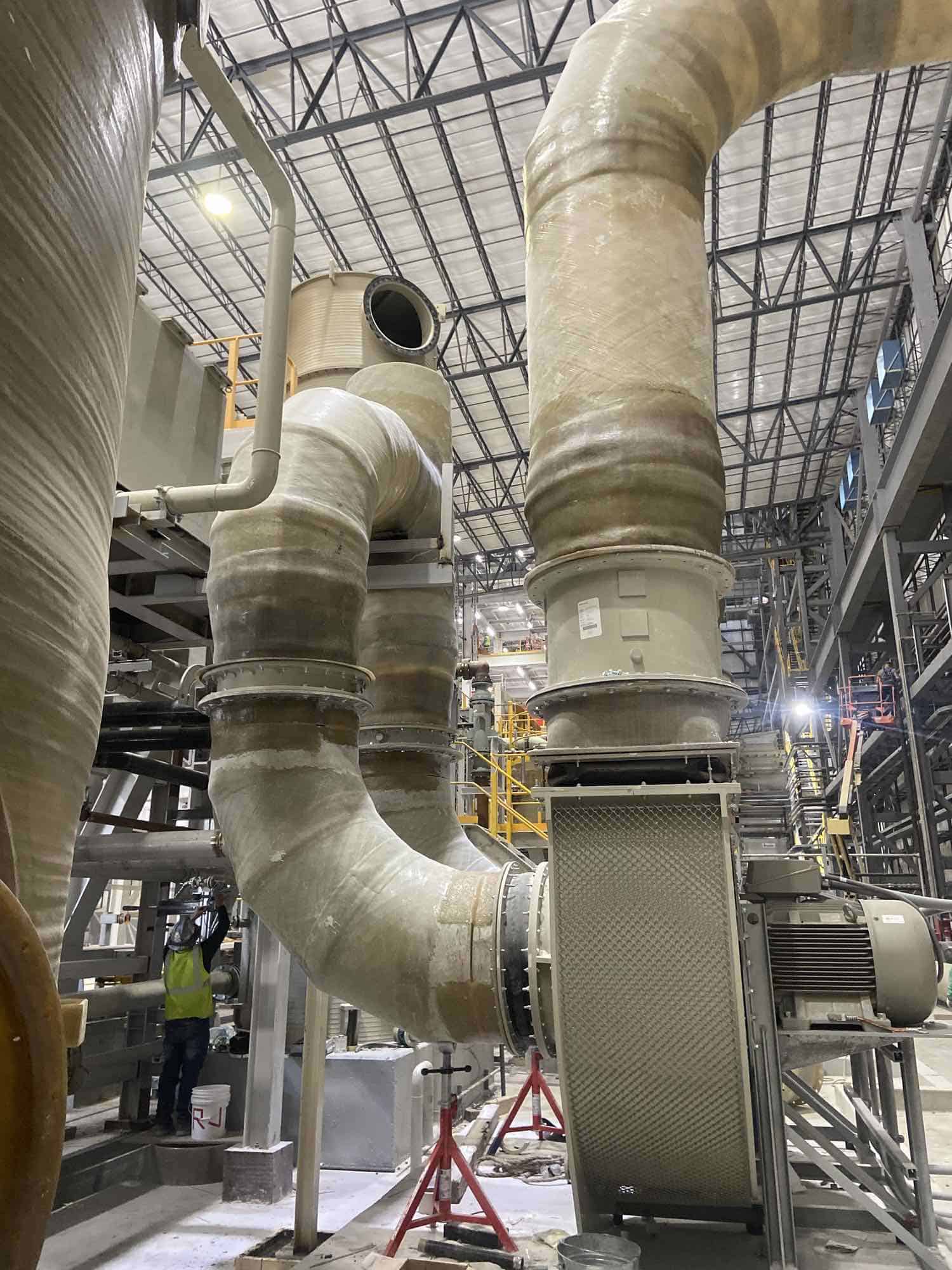
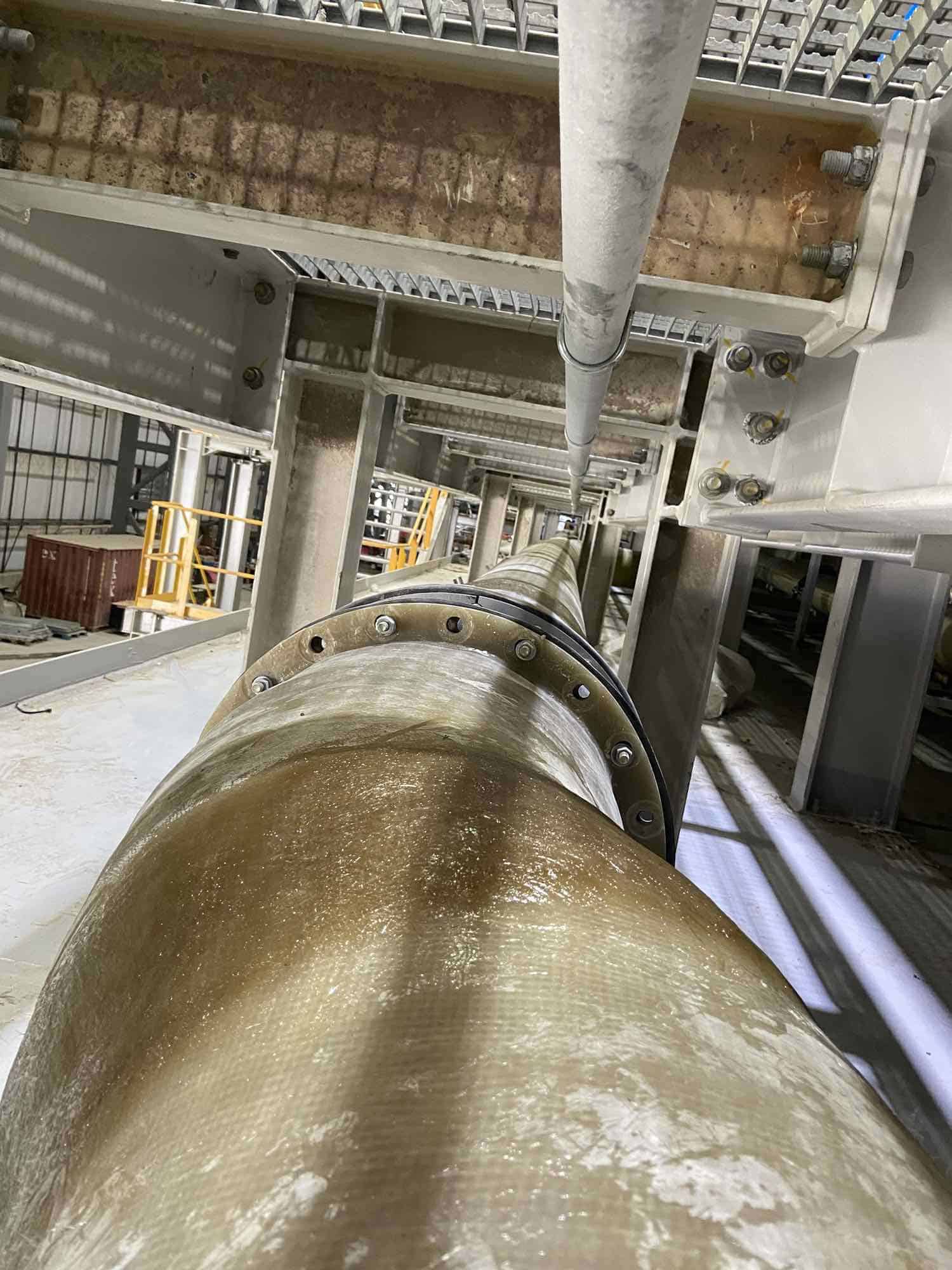
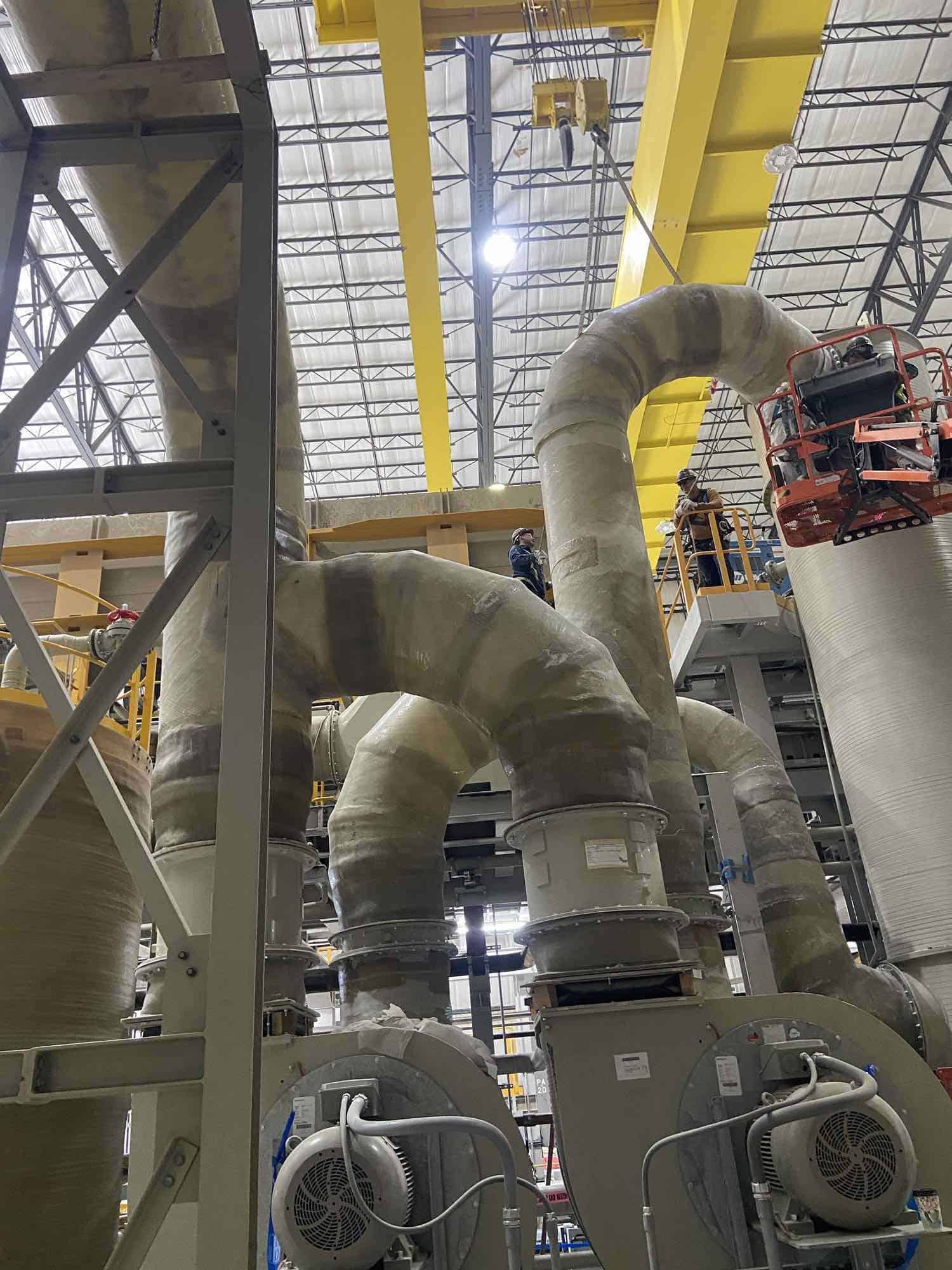
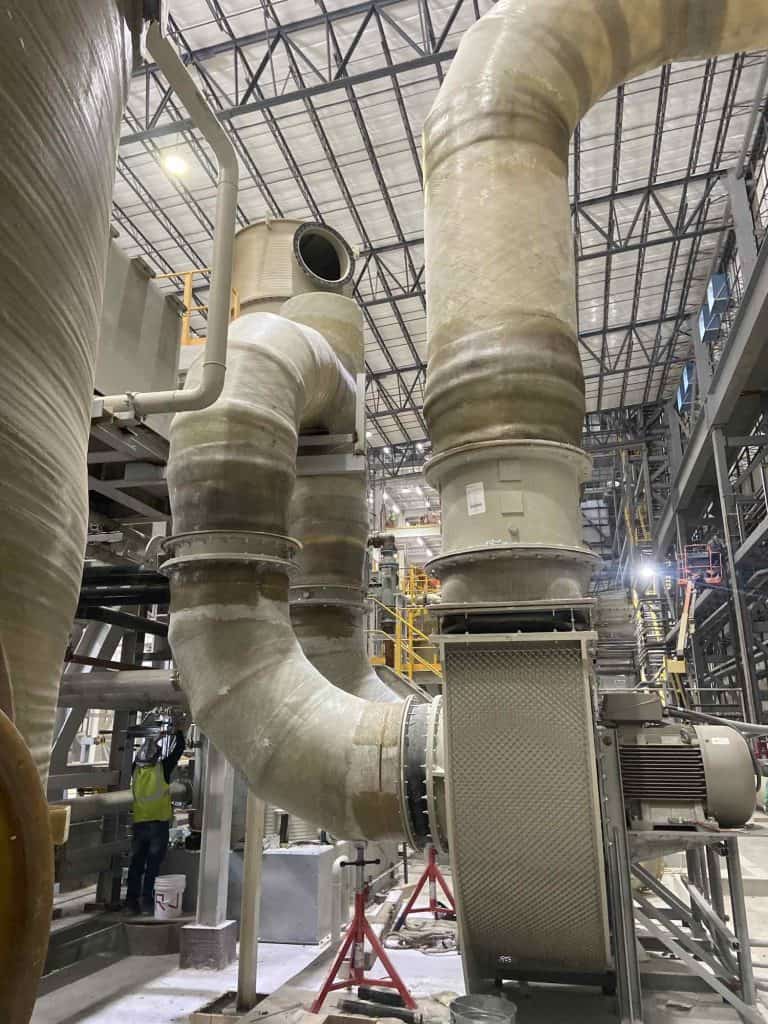
Universal Blastco fabricated and installed approximately 1,000 linear feet of fiberglass (FRP) piping for an
acid fume suppression system as part of a major expansion at a steel processing facility.
Challenge
As part of doubling the plant’s footprint, the facility required a new acid fume suppression system for its
pickling line. This system is critical for safely capturing and managing corrosive fumes generated during steel
processing. The project required precise coordination between fabrication and field installation, while
adapting to a schedule that continued to accelerate throughout the duration of the work.
Scope
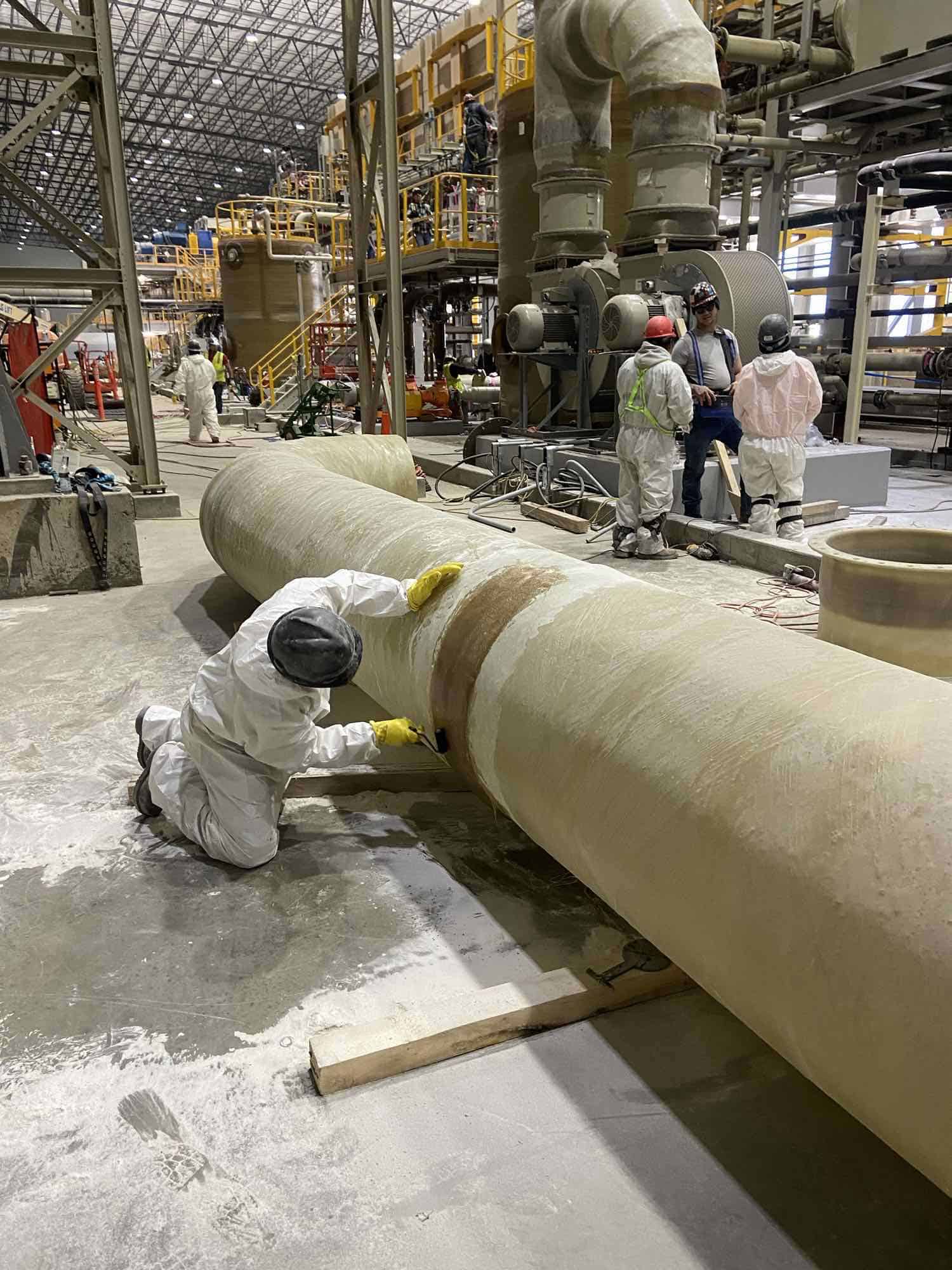
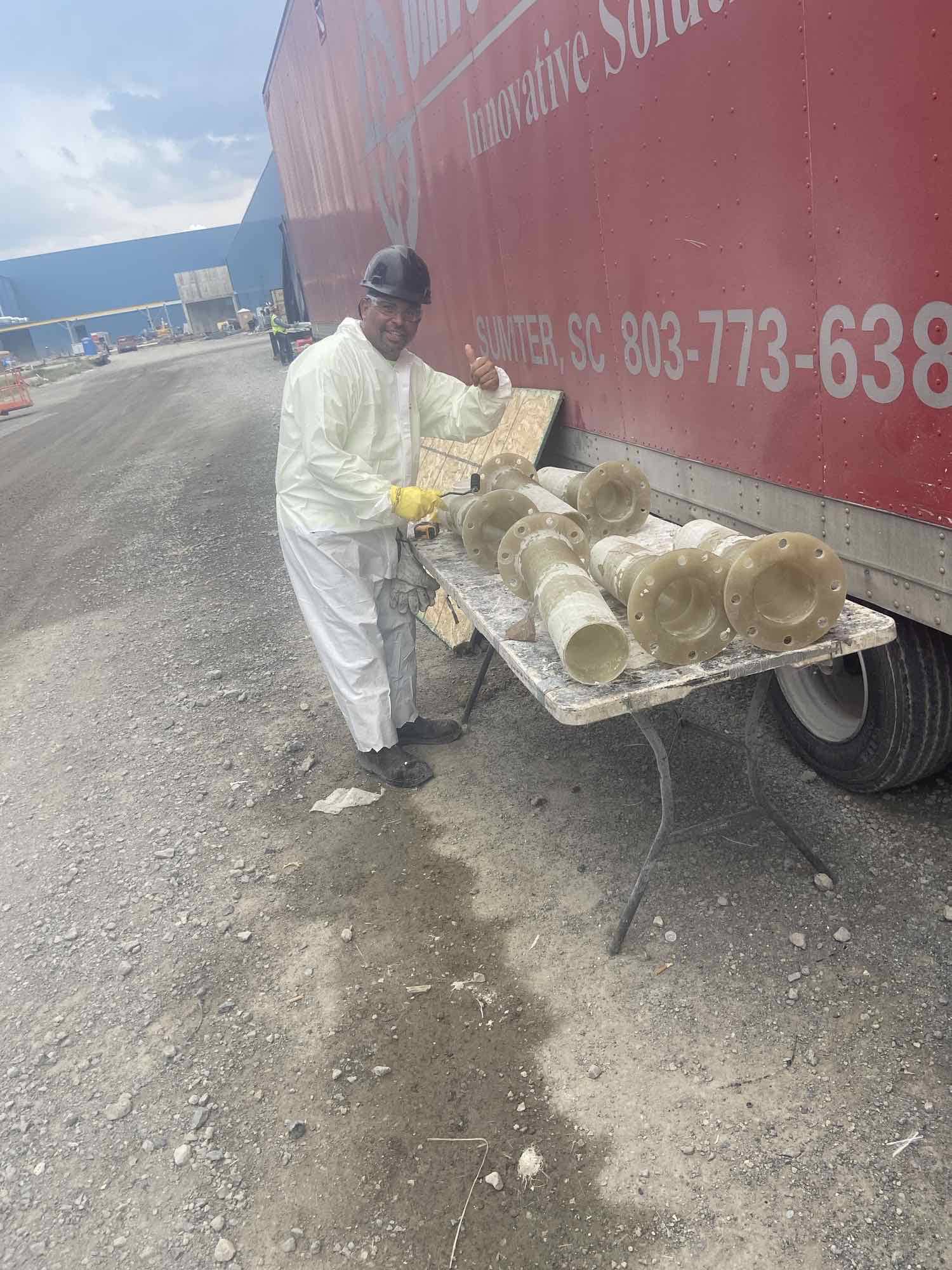
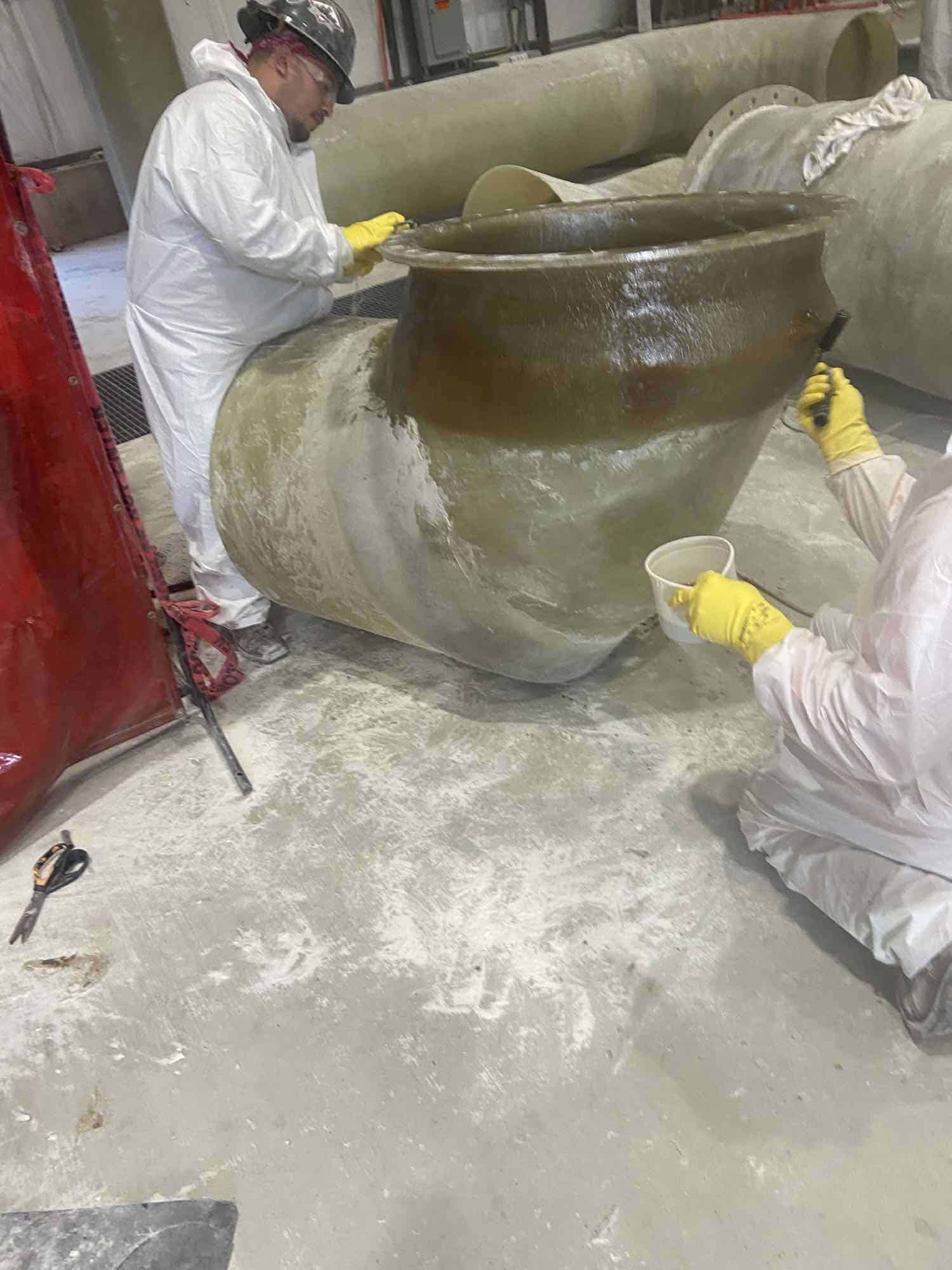
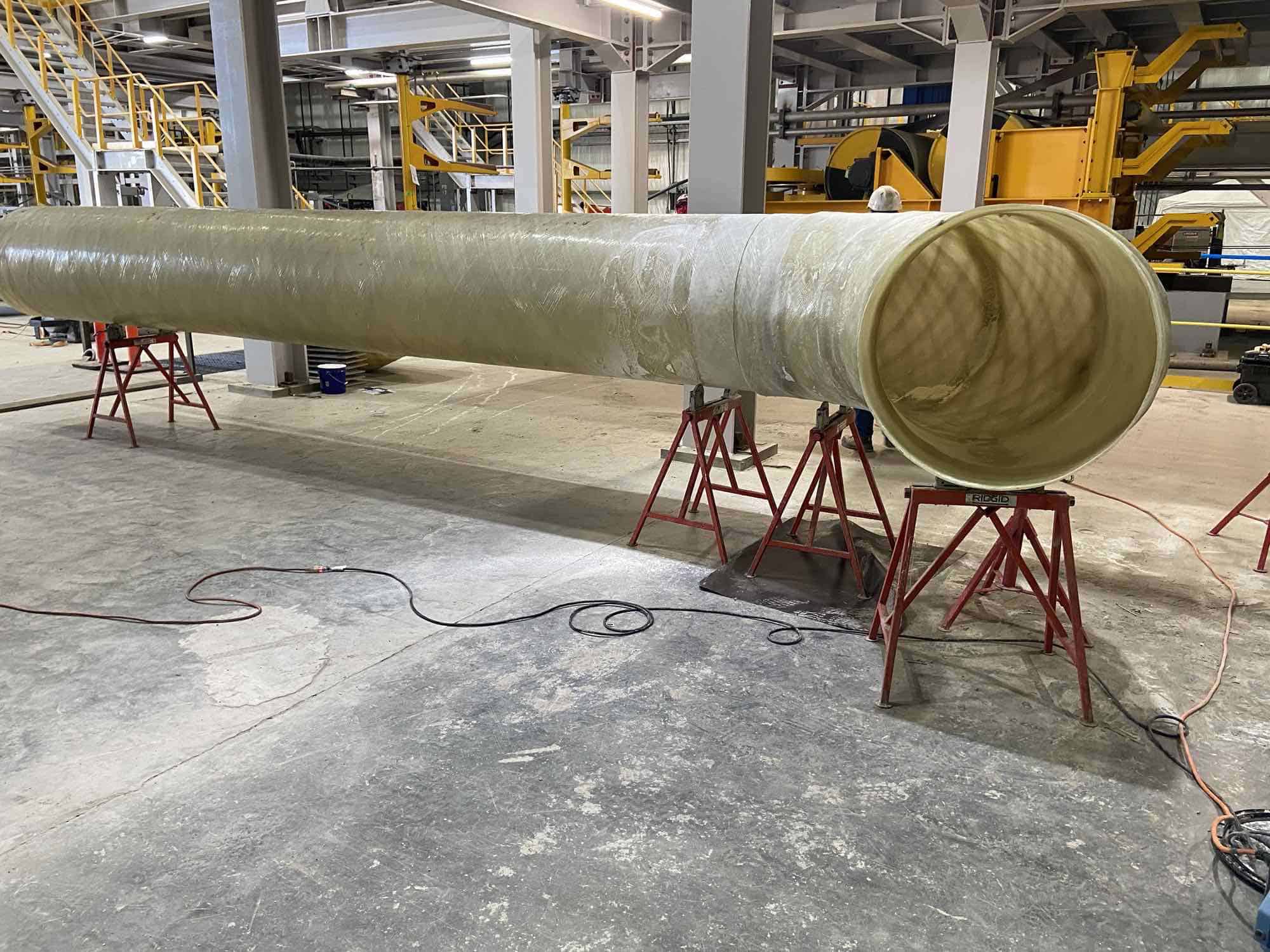
- Fabricated approximately 1,000 line
ar feet of FRP piping and components in-shop, including pre-fitting
and partial assembly to ensure quality and reduce field installation time. - Coordinated phased delivery and logistics of fabricated sections to align with project progress and
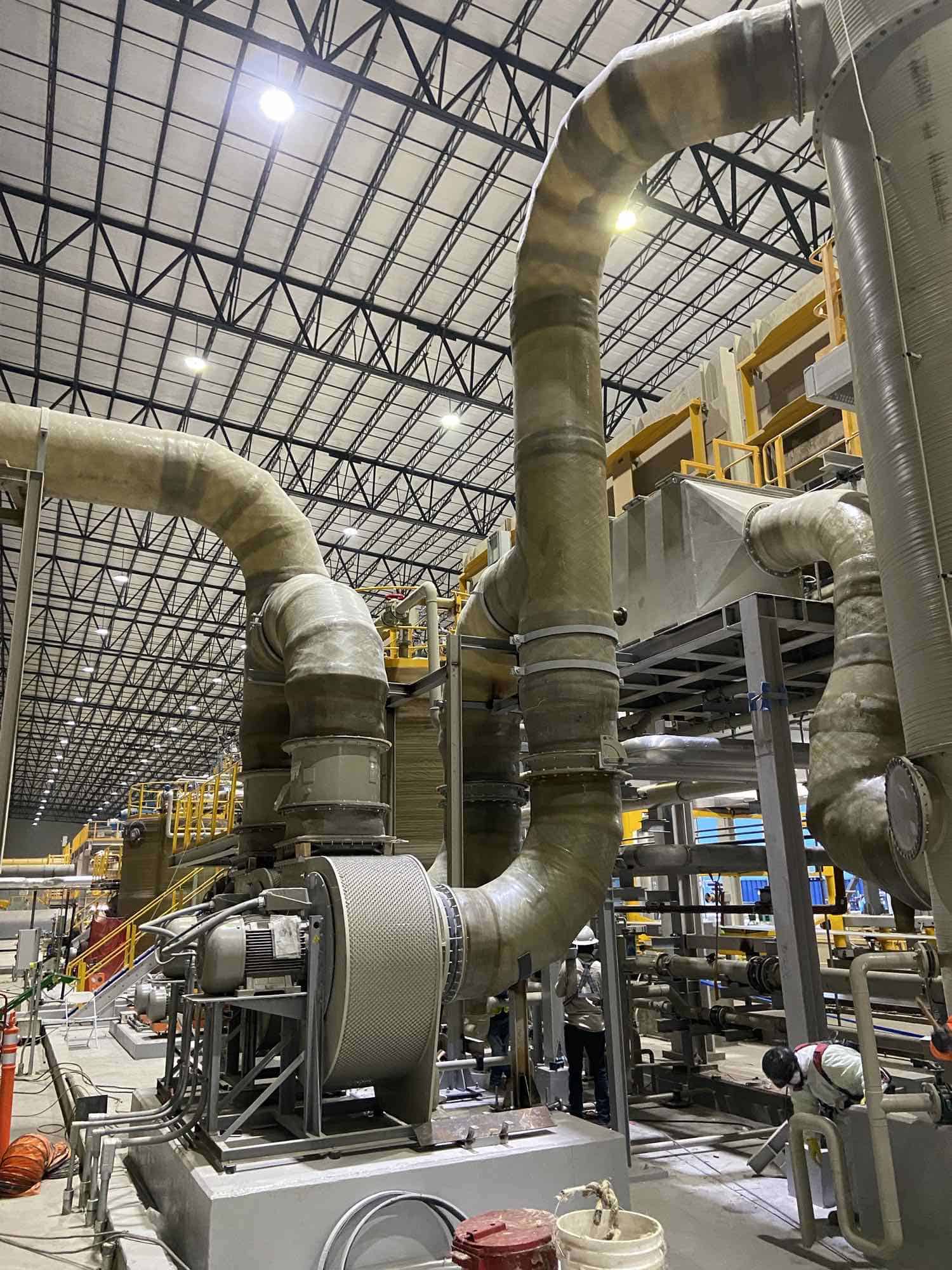
installation sequencing. - Installed the complete acid fume suppression piping system for the pickling line using experienced field
crews.
This approach leveraged controlled shop fabrication and pre-fitting to minimize field labor, reduce
installation time, and improve overall project efficiency.
Results
- Completed the full project ahead of schedule, despite multiple deadline accelerations.
- Delivered a fully functional acid fume suppression piping system supporting plant expansion.
- Reduced field installation time through strategic pre-fabrication and planning.
Why FRP is the Right Choice for Acid Fume Suppression Systems
Fiberglass reinforced plastic (FRP) is an ideal material for acid fume suppression piping due to its superior
resistance to highly corrosive environments. Unlike traditional steel systems, which can rapidly degrade
when exposed to acidic vapors, FRP is inherently resistant to chemical attack and does not require additional
coatings or linings to perform.
In pickling line applications where acids and fumes are continuously present, FRP provides long-term
durability without the risk of corrosion-related failures. It also offers a favorable strength-to-weight ratio,
making it easier to handle and install compared to steel, especially in complex routing systems.
By selecting FRP for this system, the facility benefits from reduced maintenance requirements, extended
service life, and improved reliability in a critical process area.